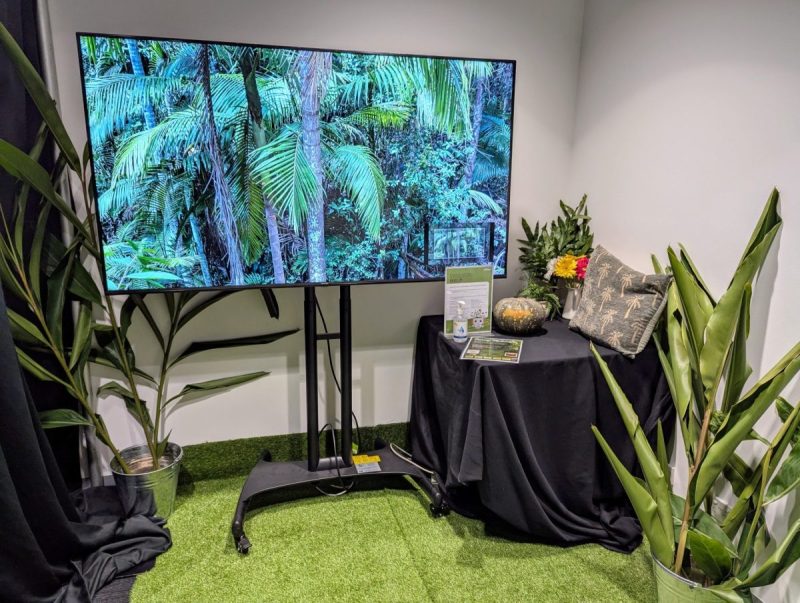
Last year at TheMHS Conference, we were honoured to partner with Sensory Modulation Brisbane to bring something truly meaningful to our event experience: thoughtfully designed sensory spaces tailored to support attendees’ wellbeing. In the midst of bright lights, buzzing conversations, and packed schedules, these spaces offered a quiet haven where delegates could pause, reset and recharge — whether that meant taking a break from sensory overload, connecting with grounding sensory tools, or gently engaging in creative or calming activities.
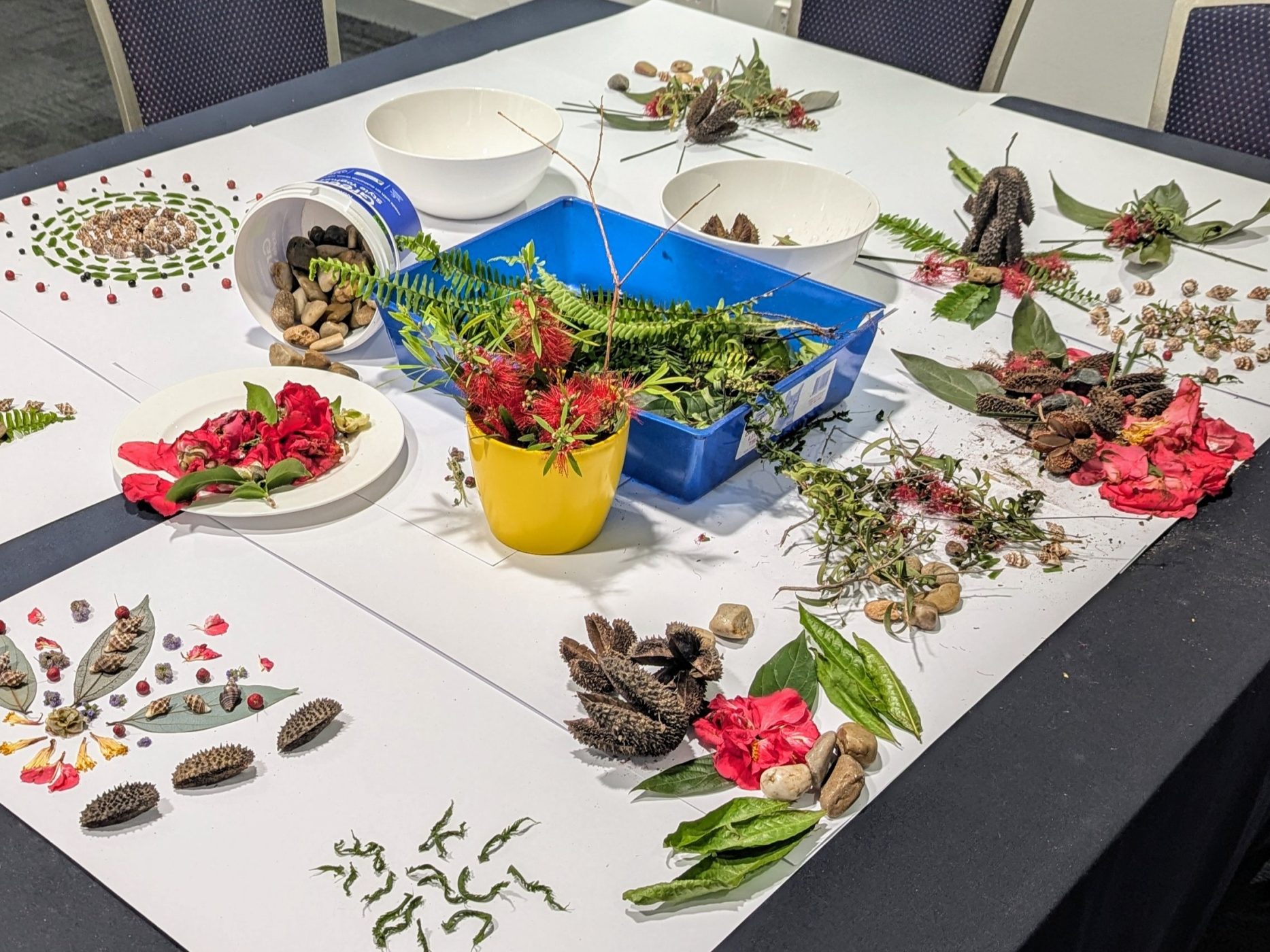
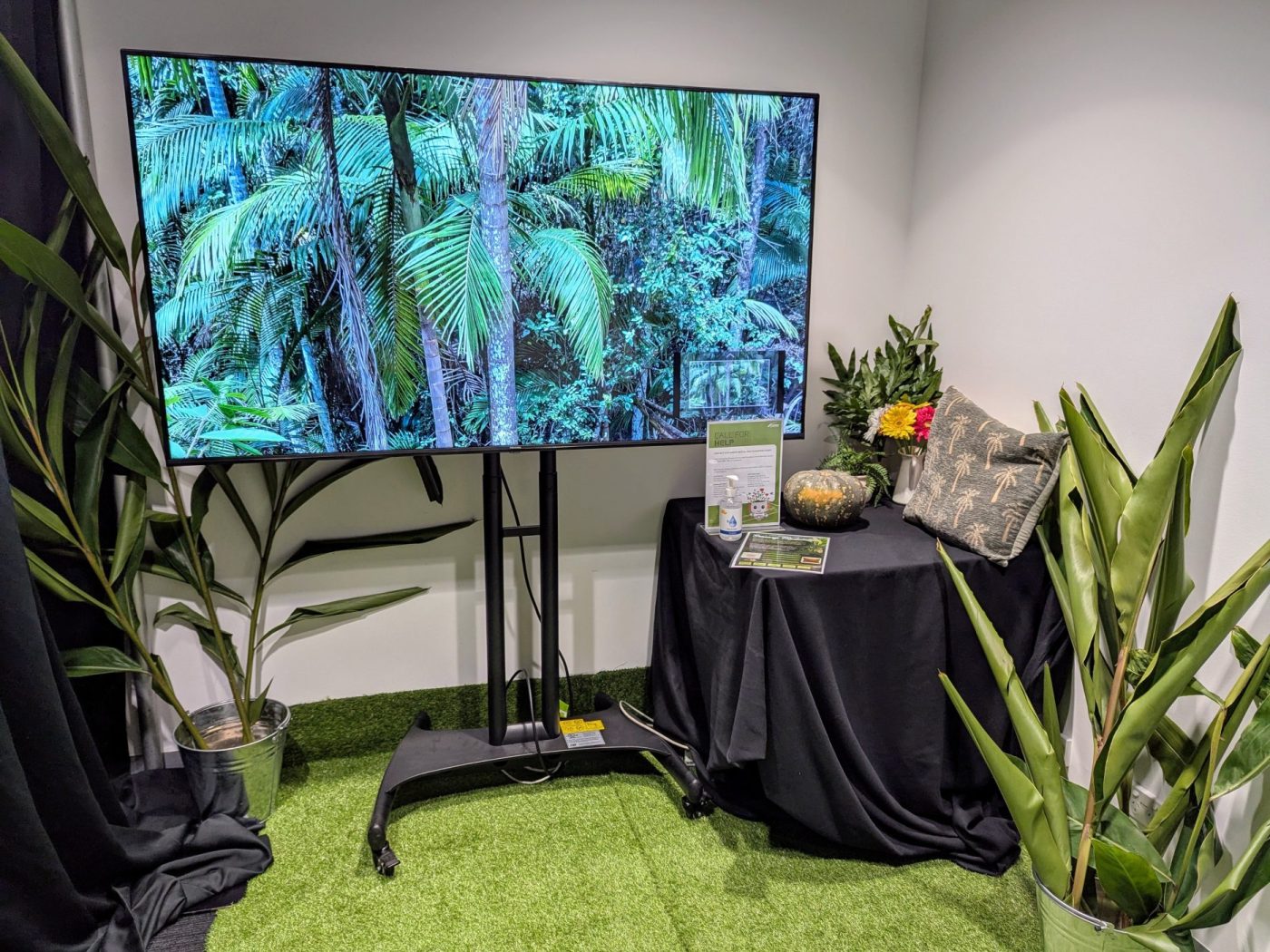
From the lush, nature-inspired Green Sensory Room, to the peaceful Quiet Sensory Pods, and the interactive Sensory Creative Room, each area was crafted with care to meet different sensory needs. Attendees were invited to step in, breathe, explore at their own pace, and return to the conference feeling more regulated, focused and grounded.
This feature celebrates the profound impact sensory-inclusive design can have on accessibility and participant wellbeing at events big and small. You can read the full article here: https://sensory-modulation-brisbane.com/sensoryroomforconference
The Sensory Experiences
Green Sensory Room – a shared “chill-out” space with comfortable seating, greenery, a rainforest video, and artificial grass. Attendees could explore a variety of sensory strategies, including weighted items, blankets, cold sensations, and intense tastes.
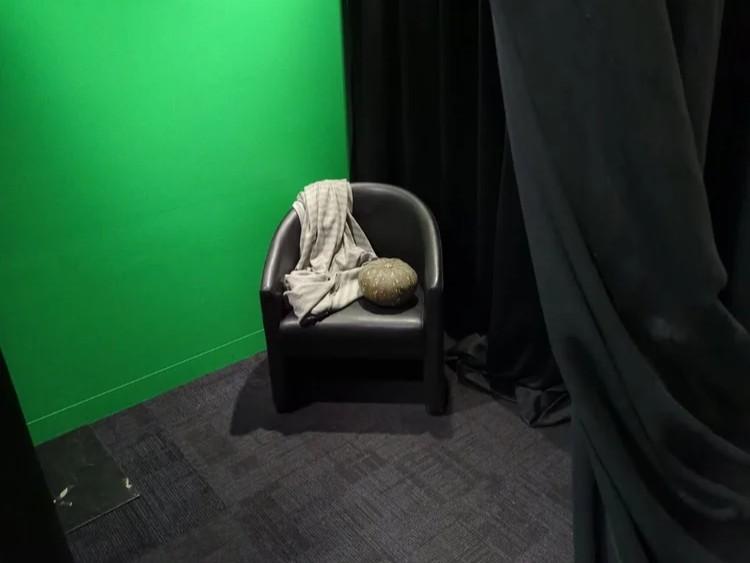
Quiet Sensory Pods – three private spaces with reduced light and noise, offering preferred sensory input like weighted objects, fidget tools, cold or sour sensations, and personalised sound through headphones.
Sensory Creative Room – a larger shared space for quiet, creative activities such as making fidget items, drawing, colouring, or crafting nature collages.
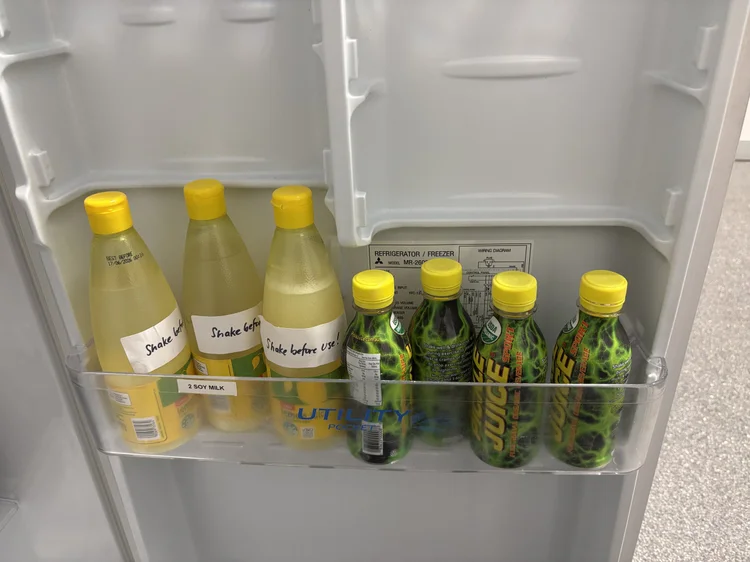
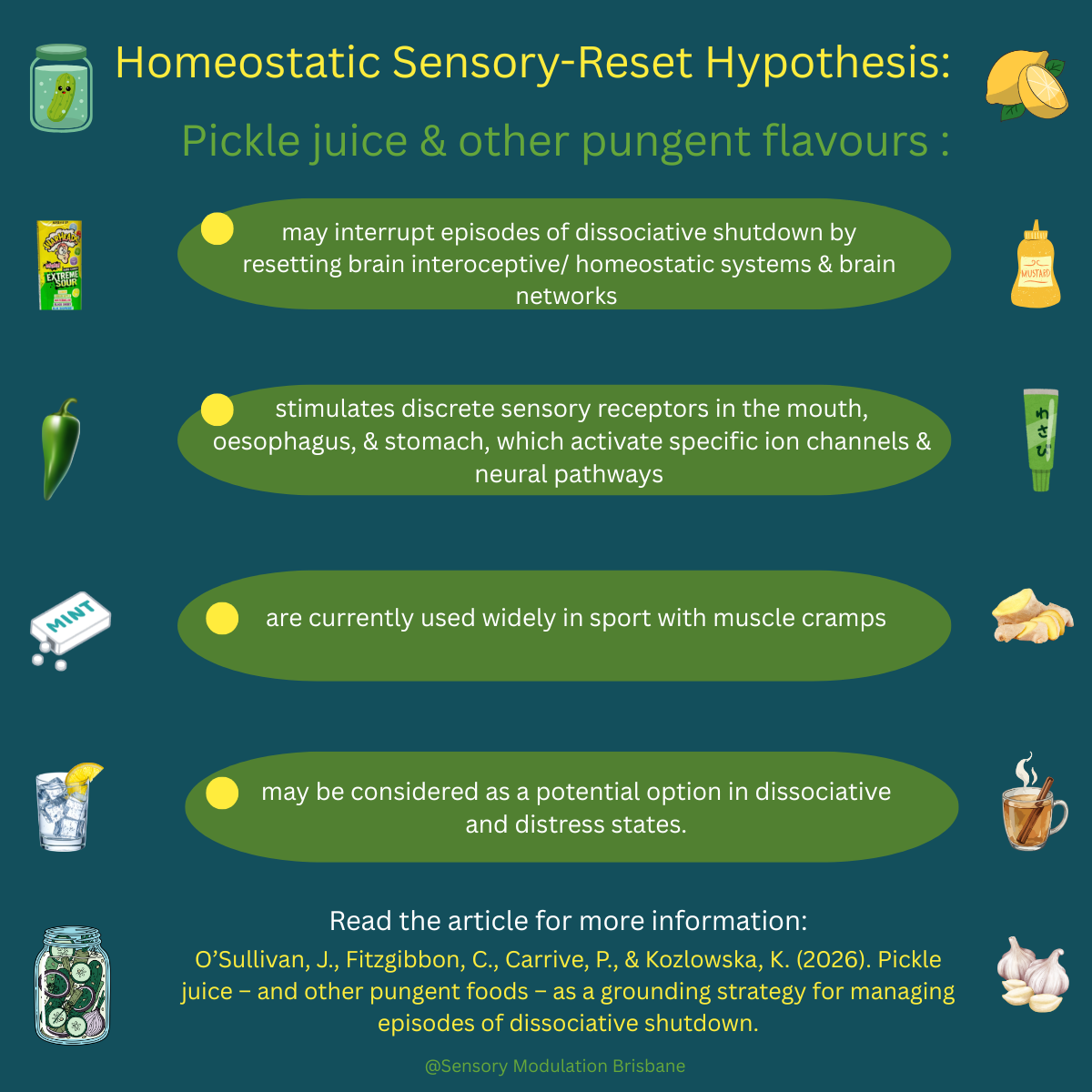
Delegates could also try intense sensory experiences designed to reduce stress and promote grounding, such as brief exposure to cold water under the eyes or sips of lemon and pickle juice.
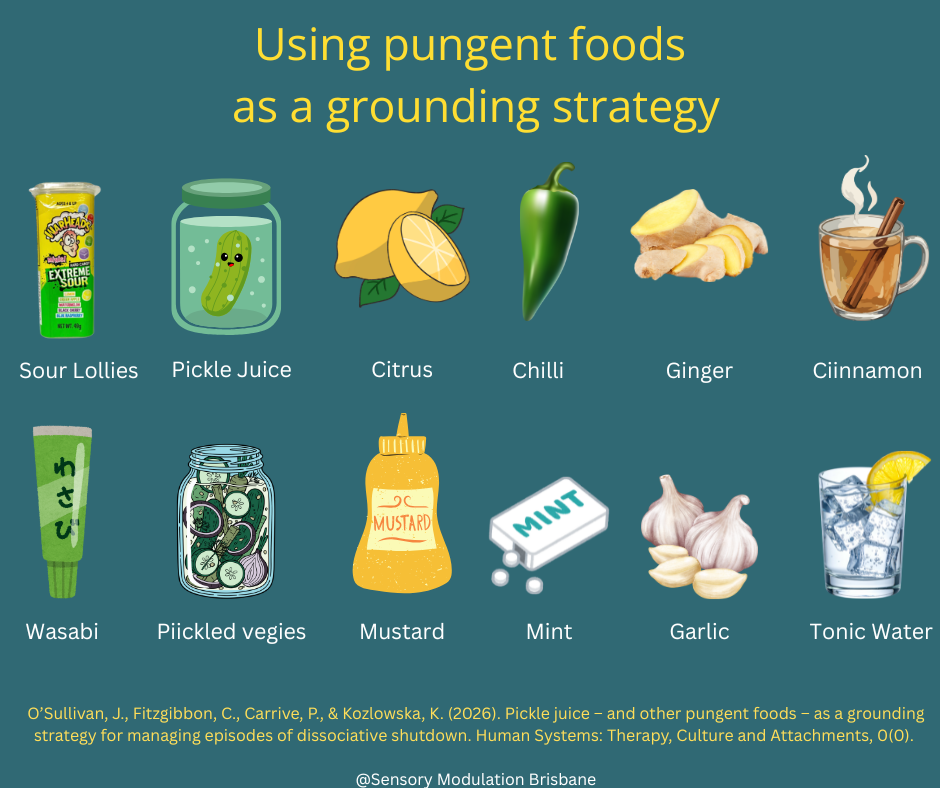
Pass the Pickles: A Surprising Tool for Grounding
- Acetic acid (in pickle juice and other fermented food products),
- Citric acid (in lemons and limes),
- Capsaicin (in hot peppers),
- Gingerols (in ginger),
- Allicin (in garlic),
- Menthol (in mint leaves and candies),
- Cinnamaldehyde (in cinnamon),
- Quinine (in tonic water),
- !sothiocyanate compounds (in wasabi, horseradish, and mustard oil)
Feedback from Delegates
Sensory Modulation received overwhelmingly positive comments and feedback regarding the Sensory Spaces:
- Delegates reported to feel very welcome and at ease in the spaces.
- Delegates appreciated the ‘familiar’ and ‘home like’ feel of the spaces which promoted a feeling of safety and ease in these environments.
- Delegates valued the opportunity to be able to access a space with less sensory input and add in their preferred sensory input if they wanted.
- Many delegates enjoyed the opportunity to try the intense sensations as these strategies were less familiar to them.
- Delegates were receptive to the strategies being so practical and affordable and therefore easy to source and use outside of the Conference.
If you would like to get in touch with Sensory Modulation Brisbane, please email: sensorymodED@gmail.com or visit their website: https://sensory-modulation-brisbane.com/